
Introduction
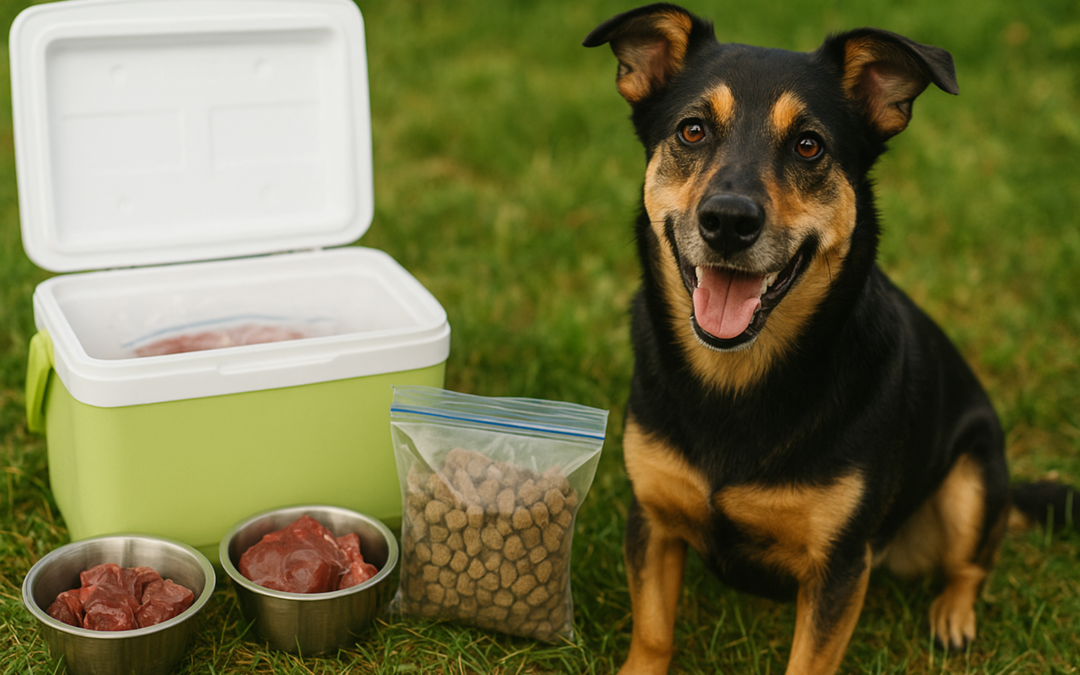
Traveling with your dog is always exciting — new sights, smells, and experiences make every trip memorable. But for pet parents committed to feeding raw, traveling adds a layer of complexity. Unlike kibble, raw food needs to stay fresh, properly stored, and served safely even when you’re miles away from your kitchen freezer.
The good news? With some smart planning and the right gear, you can keep your dog’s raw diet consistent and nutritious wherever your adventures take you. This guide covers everything from storage techniques and packing methods to feeding tips and safety precautions — all backed by insights from experienced raw feeders and pet nutrition experts.
1. Why Stick to Raw While Traveling?
Many dog owners consider switching to kibble during travel for convenience, but doing so can lead to digestive upset and inconsistent nutrition.
A 2021 study published in Veterinary Sciences noted that dogs on consistent diets had more stable gut microbiota — essential for digestion and immunity. Sudden dietary changes (like switching from raw to processed food temporarily) can trigger stomach upset, diarrhea, or loss of appetite.
So, maintaining your dog’s raw diet while traveling ensures:
- Digestive stability and fewer GI issues
- Consistent nutrient intake
- Improved energy and mood (no sluggishness or dehydration from processed food)
2. Choose the Right Raw Food Format
Not all raw foods are equally travel-friendly. Depending on your trip, you can choose between these forms:
a. Freeze-Dried Raw Food
If refrigeration is a concern, freeze-dried options are your best friend. They are lightweight, compact, and shelf-stable. You just need water to rehydrate before feeding.
Pros: No refrigeration, easy to carry, long shelf life.
Cons: Slightly more expensive and less moisture than fresh raw.
b. Pre-Portioned Frozen Meals
For shorter trips or if you have cooler access, pre-pack meals into daily portions before leaving.
Use freezer-safe zip-lock bags or containers and label them by day — this keeps your packing organized and minimizes waste.
3. Storage Tips for Road Trips
a. Use a High-Quality Cooler or Portable Freezer
Invest in a heavy-duty cooler (like Yeti or Dometic) or a 12V car freezer that plugs into your vehicle. Add frozen ice packs or dry ice to maintain safe temperatures (below 4°C).
- Dry ice tip: Wrap it in newspaper or cardboard to prevent direct contact with food.
- Pack tightly: The less air space, the longer your food stays cold.
b. Freeze Meals Solid Before You Go
If you start with rock-solid frozen meals, they’ll stay colder for longer. Try freezing them in stackable containers for easy organization.
c. Use Insulated Bags for Daily Portions
Instead of opening the main cooler multiple times, transfer one day’s worth of meals into an insulated lunch bag to keep the rest frozen longer.
4. Air Travel with Raw Food
Flying with raw dog food requires a bit more strategy due to airline and customs rules.
- Domestic flights: You can usually pack frozen meals in checked luggage, as long as they’re sealed and kept in a leak-proof cooler bag with gel packs.
- International travel: Always check import laws — many countries restrict raw meat products. You may need to rely on freeze-dried options instead.
For longer stays, consider ordering fresh raw food locally at your destination — for instance, if you’re in Ontario, you can easily reorder from Paw on Raw and have it delivered right to your accommodation.
5. Feeding on the Go
When it’s mealtime:
- Thaw safely: Move the next meal to your insulated bag or fridge 8–12 hours before feeding.
- Avoid long exposure: Never leave raw food in direct sunlight or warm cars.
- Use travel-friendly bowls: Collapsible silicone bowls are lightweight and easy to clean.
Pro tip: Always have hand sanitizer and wipes on hand. Clean surfaces before and after feeding to avoid bacteria spread — especially in hotels or Airbnbs.
6. Keep Hydration in Check
Raw diets naturally provide more moisture than kibble, but when traveling, your dog may still get dehydrated faster due to excitement or heat.
Keep fresh water available at all times and carry a portable dog water bottle. Add ice cubes to keep water cool during hot weather trips.
7. Supplement Smartly
If you’re feeding limited ingredients while traveling (for simplicity), consider adding a complete multivitamin or omega-3 supplement to ensure balanced nutrition.
Products like raw green tripe or organ blends can also help maintain gut health if your usual meal variety isn’t available on the road.
8. Clean-Up & Waste Management
Always dispose of uneaten raw food responsibly — seal it in biodegradable bags and throw it in a proper waste bin. Never leave it outdoors, as it can attract wildlife.
Keep a small bottle of pet-safe sanitizer for cleaning bowls, especially if water access is limited.
9. Return Home Smoothly
Once home, gradually reintroduce your dog’s full raw meal rotation if you simplified it during travel. Keep an eye on stool consistency and energy levels — they’ll help you confirm your dog stayed healthy through the trip.
Conclusion
Traveling with a raw-fed dog doesn’t have to be difficult — it just takes planning, organization, and the right tools. With insulated storage, freeze-dried backups, and safe feeding practices, your dog can continue thriving on their natural diet no matter where your adventures lead.
At Paw on Raw, we make travel easier for pet parents by providing perfectly portioned raw meals, bulk packs, and freeze-dried options you can pack for the road. Because your dog deserves real nutrition — wherever life takes you.